Your Agency in Change (pt. 4)
Beginning your day, you probably have your standard morning ritual. You wake up, make breakfast or stop at a cafe, and head into work or school. We don't often feel that our daily routine, nor our daily free time, can be used in meaningful ways without overexerting ourselves. However, this is far from the case. As you explore your day to day life through the lens that you have agency to make the world around you better, you start to notice little things. A little thing that makes things run smoother here, a little act of kindness there, so on and so forth. Eventually though, you begin to bring about this change in more explicit and direct ways. In today's article, we'll discuss ways that you can bring change to your community without overexerting your already packed schedule in this capitalist hellscape.
As we've spoken about before with previous entries in this series, it's best you apply yourself where your skills are best, or where your passions are richest. Not everything discussed here will work into your schedule, or be available in your community, or be something you're skilled enough to accomplish right away. That's perfectly fine, and I want to stress the caveat that this list is to get your brain moving, to give you ideas and show you that such actions are within your grasp. I wish only to inspire you to look for ways that you can apply your skills (within healthy limits for yourself and your mental health) to benefit your community. Some people might live in cities, others in rural sparse towns, but there's always ways to do something, even if they don't look the same.
As we are all well aware, I hope, there are indeed several organizations out there dedicated directly to these ends. Granted, many are unfortunately vessels for the capitalist class to maintain their system and their wealth, but others do have positive basis and positive outcomes. The first and easiest thing you can do is to research such organizations in your community. Maybe they do weekend cleanups at your local park in the summertime, or maybe they host holiday dinners for those who don't have families to spend them with. These things are usually built specifically to cater to busy individuals who may have free time late in the evening or over weekends, and generally they do not require you to invest vast amounts of time into them. If you're anxious about the time investment for much of the things we've talked about before, this could be a great option for you. These sorts of programs exist in all different sizes of community. In my home state of Connecticut in the US, there were organizations in our cities, but also local fire departments in rural areas would assume the same roll through community volunteers. Give it a look, and make sure you do your research into the organization. It's also okay to see an organization, and see its flaws. Don't ever pressure yourself to help an organization that you feel is doing harm to your community, invest your time in ways you think will.
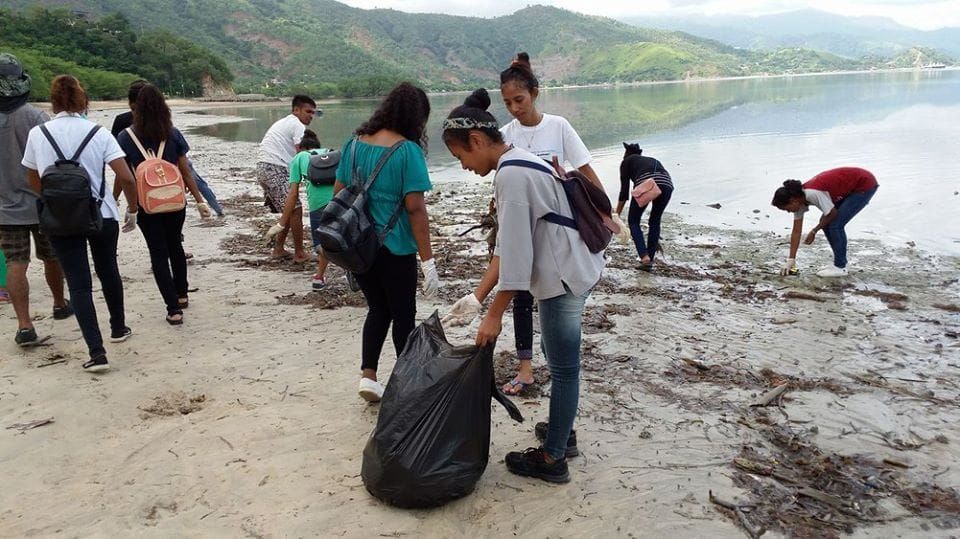
Many towns have pollution problems, both big and small. Another way you can help your community is by addressing the local pollution conditions however you can. If you go on daily or weekly walks, maybe consider bringing a protective glove and a small garbage bag when you do so and pick up trash along your route. If you live in or near a community like Flint, Michigan or Lovecanal, New York or East Palestine, Ohio or et cetera, and you have the means, maybe buy some water to give to the townspeople who often can't afford safe drinking water. If you live near a factory or business that is actively breaking laws to pollute, attend town halls and speak with your local municipalities to at least make them aware of it. Should they not listen, bring it to the wider public's attention. Norfolk Southern might have the money on hand to poison a town and then have no repercussions, but smaller local businesses surely don't, and polluting one's community is a good way to lose the favor of the people. Should you find yourself with more time to spare, maybe start a local stream cleanup project with a few fellow volunteers on the weekend, or establish community watch programs to prevent dumping in known areas.
Let's say you look around at local organizations, and you see that none fit what changes you'd like to see in your community. In that case, you should definitely consider starting them. Now, to be clear, you don't need to be a massive non-profit to undertake these tasks. For example, a stream cleanup could be organized by reaching out to parents involved in local youth programs, and you could help the next generation learn environmental preservation over a summer. Or, a small town food bank could be organized by contacting your local grocery stores and starting an online social media group in your community to distribute the food. If you see that nobody is offering a holiday meal to those who can't go home, maybe you could reach out to see how much a banquet hall rental would be and host a dinner potluck style. If you see a transit project you feel strongly should be built, such as a new bus line or a better schedule, you could always start a website and start an information campaign to get others in your community on board. Websites are often affordable and don't require you to dedicate time to it like a full time job. If you see your local park could use a new footbridge, or new paint, or better defined footpaths, or so on, you could reach out to community members and the town to organize a weekend or two where these things get accomplished.
Despite popular belief, and popular because the media has ingrained the "truth" of it into the population, many people wish to see improvements in their community, and many simply don't because they don't know how. You reading this series might have very well started out a believer in that falsehood, that nobody in your community cared and why would your efforts suddenly change that. But, if by now you've come to realize that you do have options, and that there are organizations that hide in the woodworks, then that's proof that you beginning your journey to improve the world around you will teach another person the same lesson. That person will go on to teach another, and another, and so on. I remember volunteering when I was a child in the Cub and later Boy Scouts, and while I don't agree with nor support those organizations, I do feel proud of the things I accomplished in my hometown. I have also volunteered as a teenager with the YMCA, another problematic organization, but I know I made a meaningful impact in my community. Now, I write and run FurInform as a means to help others to realize their potentials, and to help educate and motivate others around me to foster the creation of a better world.
Furries are absolutely no stranger to community support. Every convention just about has at least one charitable cause they support either by advertising for or earning money for or both. Animal shelters get thousands in donations from convention auctions, online and in person furry groups often host raffles or weekend events to help their communities. If you've attended a convention, or a local furry bowling, you have no doubt seen some form of this sort of community improvement in one way or another, and you very well may have contributed to it. It doesn't need to be large either. A local furry at the furry bowling in Connecticut had painted bottlecaps with pronouns and flags to wear to conventions and events, and was selling them for $1 so he could afford to go out to dinner afterwards with everyone, and he completely sold out because everyone wanted to help him out. The purpose of this series is to take that experience from within the furry community that has demonstrated itself to be an amazing and wonderful impact of our community, and expand it to your local town or city.
Socially, all of this has a profound impact as well. Virtually every activity on this list will invariably put you in a situation that allows you to make new friends or have new and interesting conversations. A community improvement project in one way or another introduces you to others in your community, either online through a social media group or in person at a day to clean up the park. Instead of adhering to the isolationism that capitalism encourages, you're revolting against it and founding new connections with neighbors and/or people who are interested in making the same types of change as you. Communities grow, movements persist, and changes are felt.
I will finish off this part with a small statement that we will delve into further with the final part of this series. Things have gotten so much worse in certain areas not because the people didn't care, but because the people forgot. We live in a society that in many ways is better than every one before it, but in many ways is worse than every one before it. It's important we do not stop striving for a better world, and it's important we do not forget what makes that world better.
In Solidarity,
FurInform