
Your Agency In Change (Pt 3)

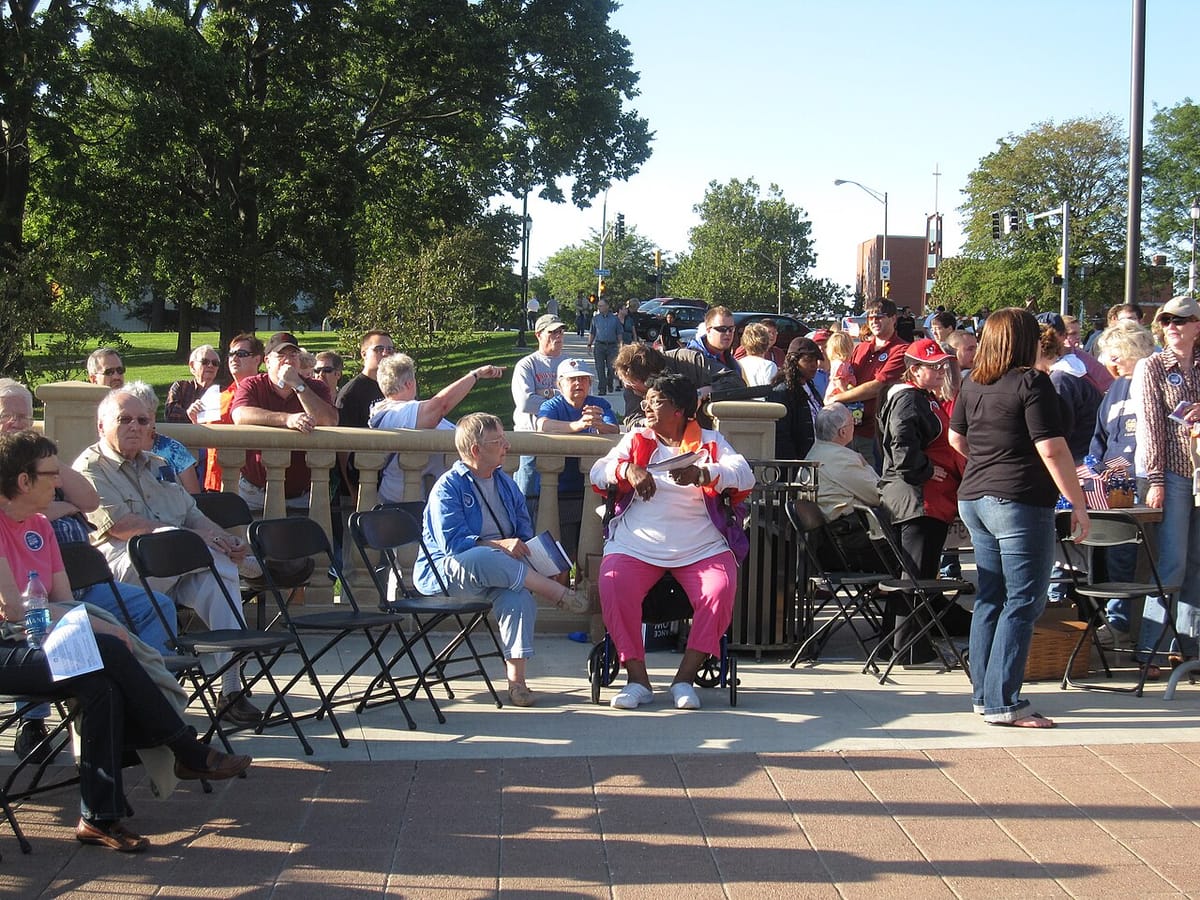
I have always wondered to myself, as a communist with an understanding of how capitalism works, why not just offer these social services to people? Economically, it makes sense. Better public transit means more mercantile business and more social order. Better subsidies mean more business transactions and improved returns in multiple related areas. Nicer neighborhoods means lower crime rates and improved public health, saving money in enforcement and treatment without forsaking the capitalist economic hegemony. More money poured into the poorer classes means more money funneled to the capitalist class. So then why are things often so terrible, even in "nicer" areas, where people need to resort to tactical urbanism and extensive community volunteering to fill the gaps intentionally created by the system at large? It has always boggled my mind. In this part of Your Agency in Change, I'll attempt to explain why capitalists regularly forsake the very improvement of their own system for the guise of profit over people.
Capitalism is an inhuman ideology at its core. It purposefully ignores, and attempts to coerce, human nature. Owing to this, it often shoots itself in the foot for the sake of its own ideology. We see this time and time again. Fictitious markets create economic bubbles that will pop decimating the working class, while the working class is the economic driver of the capitalist class and their stability is better for a bourgeois' bottom line. While in the US, things get worse and worse by the day for working class Americans, and the living standards plummet, we conversely see "stable" capitalist systems like those in "socialist" Scandinavia. Those economies are deeply capitalist, and focus on the extraction of wealth from the working class towards the ruling class same as any other capitalist country. Yet, they have some of the world's best public transit, safest roads, extensive welfare programs and subsidies, widespread community involvement and perpetual improvement projects, and so on. Capitalists, at least in some places, do see the economic benefits of their system operating with "socialist" programs. Without the return of income from the state to the people, we see what happens. The United States has spent decades dismantling the hard work put in by unions and leftists, to the extent that opposing such programs has become a political identity. One party pushes through programs that are far from even the bare minimum, and then the other party spends decades virtue signaling against those programs and they are dismantled further. This does go both ways, for anyone who still holds on hope for Democrats. Politicians make money from lobbies, lobbies want less regulations and more taxpayer money, they want the right to charge whatever whenever, and politicians grant their wishes. Reductive, but the gist of the pattern. Bike infrastructure or slightly improved public transit? How dare you challenge the car industry. New government job programs? How dare you challenge the AI industry who is replacing humans with 97% worse service. Food programs that support farmers and international trade? How dare you support racial minority families in cities. So on and so forth.
The moral, of course, is that capitalists are stupid. They neglect to see the existing detriments to their very own system, because they've been trained to see that any money returning to the people is a failure of their system, even when it's the only thing keeping it afloat. Scandinavia may be "free" from this thinking, but make no mistake, they are simply where the US was following The New Deal. Capitalism as a system moves in one direction, and that direction is towards collapse. It might take years, or centuries, but, it inevitably fails. They try again and again after each failure, but the pattern repeats. They ignore that it is the system itself that breeds this outcome. Billionaires can exist in a world with universal healthcare, guaranteed home programs, and food provision programs, but they don't want to. Simple as that. A medical company can easily get by under a socialized system, and they even did so in the US when healthcare was largely voluntary or research based and funded by universities, yet nowadays they claim they will collapse if they don't charge that extra $1,000USD on top of the insurance copay from their customers for a simple doctor's visit, because stockholders expect nothing but infinitely increasing profit graphs.
It has nothing to do with ability. I can quote number after number ad nauseam to you. You found this article, you know the realities. Military budget here, bailout there, both could easily end world hunger, or buy [at current market values] a home for every single American, so on and so forth. Starvation exists in our society not because it can't be overcome, but because the capitalists want it there. A starved person is too desperate to revolt. Comfort under the system, as seen in Scandinavia, turns into a public debate about expenses, as seen in the UK, which turns into a foreign "communist" policy, as seen in the US. Compassion is rooted out, because compassion leads to questions of the system. As a result, programs that are compassionate in appearance, but serve to benefit the capitalist system, are openly attacked and destroyed, accelerating the cycle of economic highs and lows. Recessions, as defined by the capitalists themselves, go from every few decades, to one per decade, to one every 5 years, to now as we see in the US practically one every day with the rapid increases and absolute tanking of the markets at the hands of Trump's Twitter feed.
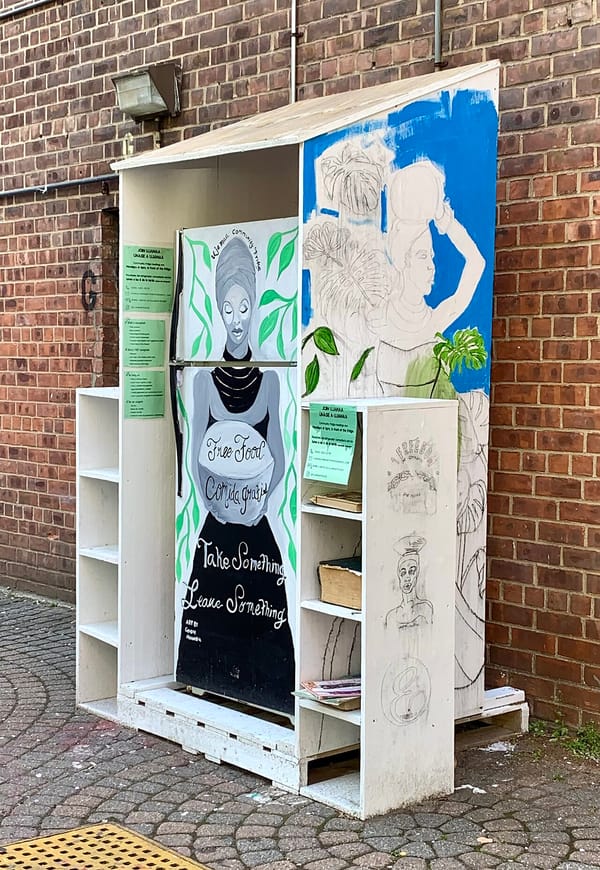
So, I've stated the obvious. Capitalists don't provide these services because they don't want to, not because there's some fiscal science behind it. If fiscal science points to a program helping the capitalist class, but involves also helping the working class, it gets assaulted in the halls of government buildings and backdoor meetings. What about this pertains to your agency in fostering change around you? The capitalists don't want the change, and they're going to fight against it, why try? Well, that is the exact reason right there. It is a form of revolution. A revolt against the system that seeks to let your neighbors starve. That encourages your street to be coated in a layer of toxic plastic trash. That actively creates crime in communities most disadvantaged. That targets those with mental conditions, and those in minority communities. Volunteering for one night at your local soup kitchen means that at least one more person is saved from starvation caused by the system. A tactical urbanist project to install a visible crosswalk means one less pedestrian killed by auto-industry led road design. A volunteer project to collect donations for rebuilding after a natural disaster means one less person left destitute for something they had no control over when their insurance company inevitably abandons their claim. Your agency comes from spite. In spite of capitalism, in spite of the inhumanity, in spite of the harm. One change turns to two turns to three. If you, as we discussed in the last article, give up on one, because four is your goal, then you're missing the opportunity to revolt in other and additional ways. Capitalists don't want this change, so they fight it. They discourage community support programs by disenfranchising them, or promoting harmful ones like the Salvation Army in place of actually helpful ones. Your efforts are a middle finger to them.
The government should help its people, it should serve its people, and under communism it will, but under capitalism, it does not. We must fill that void intentionally created by the capitalists if we wish to improve our lives. There are innumerable ways to do so. CleanwithBea on YouTube proves that support for those living in deeply unhealthy environments can be helped through crowdfunding and through a single person's drive to help, and that has become her full time job in a capitalist system. Artists have shown that giving away a few free pieces to people can drum up great support for their other work allowing them to charge what they are worth for their time, and earn a better living. Massive non-profit organizations still operate wholly within the capitalist system, but offer open source and free to use softwares across the board. All this to say, the change you wish to implement does not need to be an antithesis to the system, and with neglect to your own well-being as you try to survive in this system. In the next part, we'll discuss in greater detail the means you have at your disposal to effect change. It might surprise you to hear just how much you can do in your day to day life.
In Solidarity,
FurInform



.jpg)