
Your Agency In Change (Pt 2)


Last article, we discussed the broad introduction to the importance of involving yourself in community efforts directed towards positive change. As we covered that, you might have been thinking of the excuse that people give as to why such efforts are either not worth the work, or are futile even if the work has a good outcome. Understanding this, we can see where the argument comes from.
As we live in our capitalist hellscape, the hegemonic control that capitalists exert on our society dictates that challenges to such a profit-based system must be discouraged. It is the goal of the system at large to purposefully disincentivize non-profit driven change that benefits people, and not the wallets of the bourgeoisie. Now, we're not saying that communists are falling for capitalist propaganda and are secretly class traitors. What we are saying is that the capitalist goal is disincentivization, and through doing so, they create a hegemony of impassability. Without condemning and overthrowing the pervasive capitalist system, communist proponents of this argument say, we cannot meaningfully exact change in our lived environment. Until capitalists are held accountable for their anti-human crimes, we cannot progress as a society. This argument, the one coming from the communists, is understandable via an understanding of Marx and his discussions on hegemony. It is also understandable given the successes of capitalists to discourage pro-human actions to bring about minor change.
As understandable as this is, it is incorrect in practice. Yes, your weekend volunteering will not suddenly overthrow captures in your community. Yes, your tactical urbanism won't suddenly fix all the traffic issues in your locale. But the difference is in which goal you are attempting to achieve. A communist who argue that community effort and involvement is futile in this way is often advocating for the sole goal of overthrow of capitalism. End the capitalist reign, and we can then improve our lived environment afterwards. Don't dedicate effort to this small project, when we can be dedicating effort to the sole important outcome of negating the hegemonic world order. Yet, the goal of volunteering in your community, or doing something that improves the quality of life for yourself and those around you, is not to end capitalism. That can, and should, of course be the goal in the long term, but, until that point, the goal is to make life better for your fellow humans.
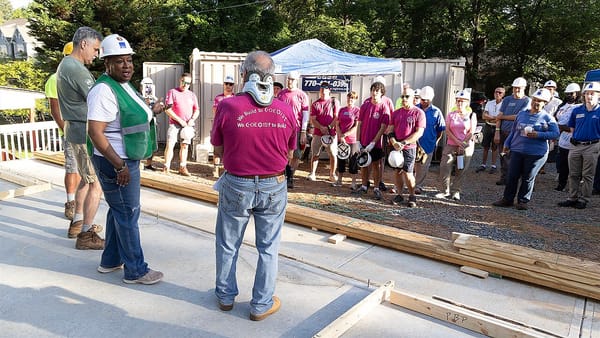
The difference in goal-related focus is one that divides the communist community in ways that harm our cause more than they help. We are not here to blame people for coming to the temporarily-nihilist perspective that effort in regards to small community change is futile. It is only logical to arrive there. Marx prioritized overcoming capitalism. Capitalists have significant legal barriers to disincentivize change. Yet, it is important to realize that this is a mentality without basis in nuanced society. What does it mean when we say "without basis"? We mean that humans are not condemned to a finite amount of energy. We do indeed have finite time, but, time with such scale that spending time volunteering does not suddenly prevent people from revolting later on or engaging in party or union activities. You can both overthrow capitalism, and prioritize that as the utmost important goal, but also overcome small impediments to the quality of life in your own community. The part of the argument that focuses on acting on small communal change distracting from meaningful revolution pretends like we humans/therians have a binary choice between revolution and improving our environment incrementally. Additionally, the secondary part of the environment that focuses on the futility of the change, as it does not persist or it eventually causes more strife than it's worth can be disproven consistently by examples in our community. Every day, untold numbers of people are brought back from precipices that their mental health conditions push them to because members of their community lend their help. People who rely on food banks can stave off malnutrition because of donations made by community members. Victims of capitalist structures frequently are given a better chance at life because of kindness of neighbors not motivated by profits. All this to say, even though some change is reversed by capitalists, such as tactical urbanism, a demonstrable amount of change has a measurable and lasting impact, even if it's only in the life of one individual. Reality proves that futility in this regard is a fallacy.
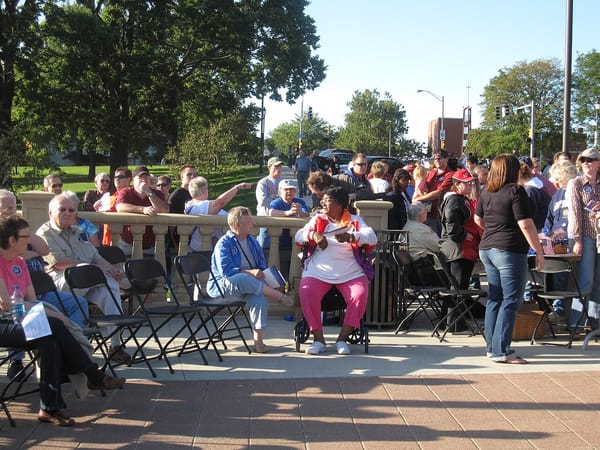
So, the arguments are not based on reality. What does that mean for the harm to our broader communist discourse? It leads people into camps where they begin to believe that the other side is unable or unwilling to see the "true impacts" of the communist cause. Someone who thinks that a weekend volunteering session will detract from the broader communist cause very well might grow to resent such movements, seeing them as attempting to work within capitalism instead of overthrow it. Conversely, people who believe strongly in the incremental communal help might feel as though those who focus solely on overthrowing capitalism are putting their efforts into the wrong areas, and are neglecting instead of helping their community. A balanced understanding of both sides, however, allows for harmonious melding of the two ideas. We do see plenty of examples of this in local communist parties, where they organize soup kitchens or food drives or other community geared programs, and this is proof of the importance of focusing on all kinds of change we as communists have agency to implement.
As capitalists destroy their world order before our very eyes through wars and neoliberal and neoconservative policies among others, the people that suffer the most are workers. Revolution against capitalism is the end goal. We must end this world order that seeks to condemn billions to unnecessary suffering. But we also cannot forget, as individuals in this hellscape, we can still make things better, even if only one small change at a time. Changing the life of one person, even in a small way, is a huge victory. A victory that can, and will, be built upon as we dedicate ourselves to improving our works around us.
In Solidarity,
FurInform

.jpg)