
The Conundrum of Making Higher Education More Autonomous [2/2]
Universities and similar around the world are threatened by the austerity policies and political moves of far-right governments. How shall we protect and democratize the top notch of education ? Part 2
![The Conundrum of Making Higher Education More Autonomous [2/2]](/content/images/size/w1200/2025/12/photo-1627556704302-624286467c65.jpeg)
In the first part of this issue, we have identified the multifactorial threat of financial and direct government intervention to limit the powers and independence of higher education institutions. We have also been exposing the social reproduction happening in the french model of higher education, under tight state control to produce an elite state engineered class, with limited political contest. Finally, we have tried to imagine a first step, a social-democratic reform of higher education to better its independence. However, there is still room to better this system.
Democratizing Governance
The governance of universities has a varying degree of democratization. In the US, the governing board is usually selected by the executive of the federated state, or through provisions of a charter built by religious institutions or private actors. This board manages the budget and appoints an Institutional Executive Officer, similar to France’s university president. Although the key educational matters, such as degree requirements and accreditation are prepared by faculty senates and approved by federally-sanctioned agencies, the nerve of the war is still who controls the flow of money. Elected student bodies, autonomous or explicitly created, can only cater to immediate student needs or organize cultural activities under the university’s watch.
May 68 pushed France to democratize its universities, creating administration councils responsible of the budget and of the president’s election, elected by each sector of workers (maintenance, professors) and students to govern themselves autonomously. In a typical french vertical fashion, the minister for Higher Education can still dissolve the council and boards of universities to trigger new elections or suspend any exercising official, needing the concerned party to sue for an overturn in administrative courts.
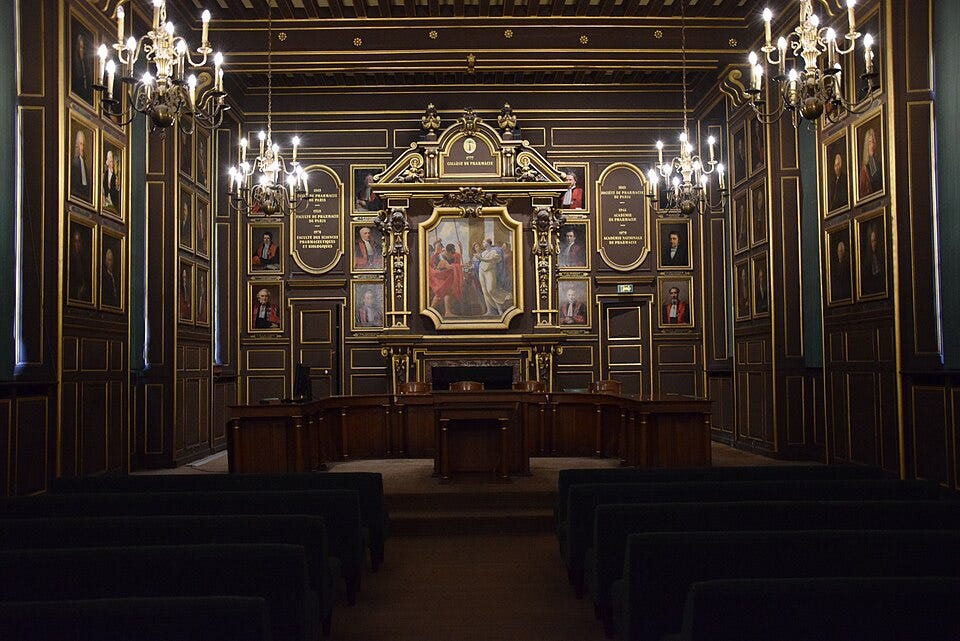
As a democratization fan, it’s quite obvious that i yearn more for the french way of governance. But it still could be a lot better. First, council needs to be expanded, as they are bound by law to be only from 20 to 40 members. With the growing number of student enrollment, they would need twice the personnel ! Outside “personalities” in the council should keep some seats reserved for lower level of government representation and outsider union representation, but most of them should be ordinary citizen having some distance from the subject, to bring fresh air inside, even if they would stay a minority. And for the student-technical staff-professor majority, the election should be STRICTLY under classical party-list proportional representation, as the 2007 reform in France introduced a majority bonus guaranteeing half of the seats for the winning list ! Complete insanity !
As for disciplinary sanctions, especially if there’s no commission with student representation as in France, the deciding jury should be composed of one third of professors, one third of outside jurors, one third of students to be able to have a balanced overview. They should have a right to appeal to either courts, or a national appeal commission who can both have a final appeal. To prevent damaging too easily a student’s curriculum, we could make the first appeal suspensive of the given conviction.
For other bodies inside universities, such as academic boards or faculty senates, some student representation is needed but it could be left to internal discussion. Each university should have an internal charter or status, allowing everyone on campus to decide how decision making is made with a “constitutional assembly”. Central governments may validate such charter if they satisfy as requirements the suggestions written above, before becoming the law of the institution.
For the more franco-français case of Grandes Écoles, they should all be forced to democratize under the same way as universities would be. There should be support for student and professor unions to settle there, and guarantee the rights of the learner and the teacher. In the long-term, the prépa classes should be abolished, splitting the qualified personnel into specialized intensive course in Unis. All the élites Grandes Écoles will then become a component of a larger university, becoming a more specialized branch of it selecting partially on records or internal/external exams at grand maximum, leaving spots open for more inclusivity. Another solution could be to gather them all in a State University, offering in massive quantity comprehensive introductory classes in different subjects or direct entrance exams (made rarer) to allow everyone to benefit from the knowledge and quality of teaching. The objective is to burst the sociological bubble of those elite circles.
As stories of abuse are uncovered in this system every year, additional scrutiny must be placed on those institutions to stop this toxic culture.
Towards a Revolution for the Ideal Uni ?
Education is a crucial step that allows the reproduction of the division of labor, e.g. the gender division of labor. As technical education prepares the future proletarian for the division of its labor (lowering of the value of it), elite education prepares the top notch of capital to be able to rule and extract the plus-value of all the proletarian, managing production for their own interests. There’s even been a study on the level of care and attention teachers provide to students following the grade, or field of the course, which creates a division of labor between beginners who do all the classes that teachers with more diploma or experience don’t want to do.
Evolving in a post-capitalist world (hopefully tuition-free), Higher education should aim to massively expand its reach by mixing more technical, down-to-earth and traditionally vocational teaching to more abstract, intellectual courses. Like mixing more intellectual and careless students has its social benefits on the less able pupils, making students interact with more diverse fields should help blur and suppress the stratification between types of work, and allow each to develop or reconvert their working abilities throughout their life.
With expansion must also come the decentralization of the institution, permitting the autonomous development of smaller campus around regions and countries to be able to reach smaller communities, who might develop their capacities even better in the context of a tight-knit group of students. After all, a prépa student i used to know said to me that it was common practice to look forward to non-Parisian prépa classes, because the atmosphere was more warm, collaborative and with less pressure. Autonomous governance shall spread to the class, lectures and lab works themselves, for students and professors to elaborate in common their own education.
And I hope that once this time comes in my country, there will be way less class hours. It’s awful to be taught from 8 AM to 6 PM with rare interruptions, 5 days a week in order to learn ! But that’s a topic for another day…
In Solidarity,
Furinform.


.jpg?ref=furinform.com)