Furries, Fursuits, & Scams

Last month, we discussed the presence of an ever increasing amount of capitalism invading our space as furries. We covered how the economic factors on all sides created and perpetuated divides in the community by exacerbating wealth disparities. Unfortunately, it also leads to an additional problem. That being, scams. The term scam is often used broadly in the current online media sphere, from false advertising, diminished product quality upon receipt, or stealing of money. We're here to discuss that very last one, disparagingly. In an environment where capitalism grows unchecked and unmitigated, we begin to see snake oil salesmen who take advantage of those in lesser economic classes. I myself was almost a victim of one of these scams, and more than one of my friends were unfortunately scammed out of hundreds of dollars by similar ones.
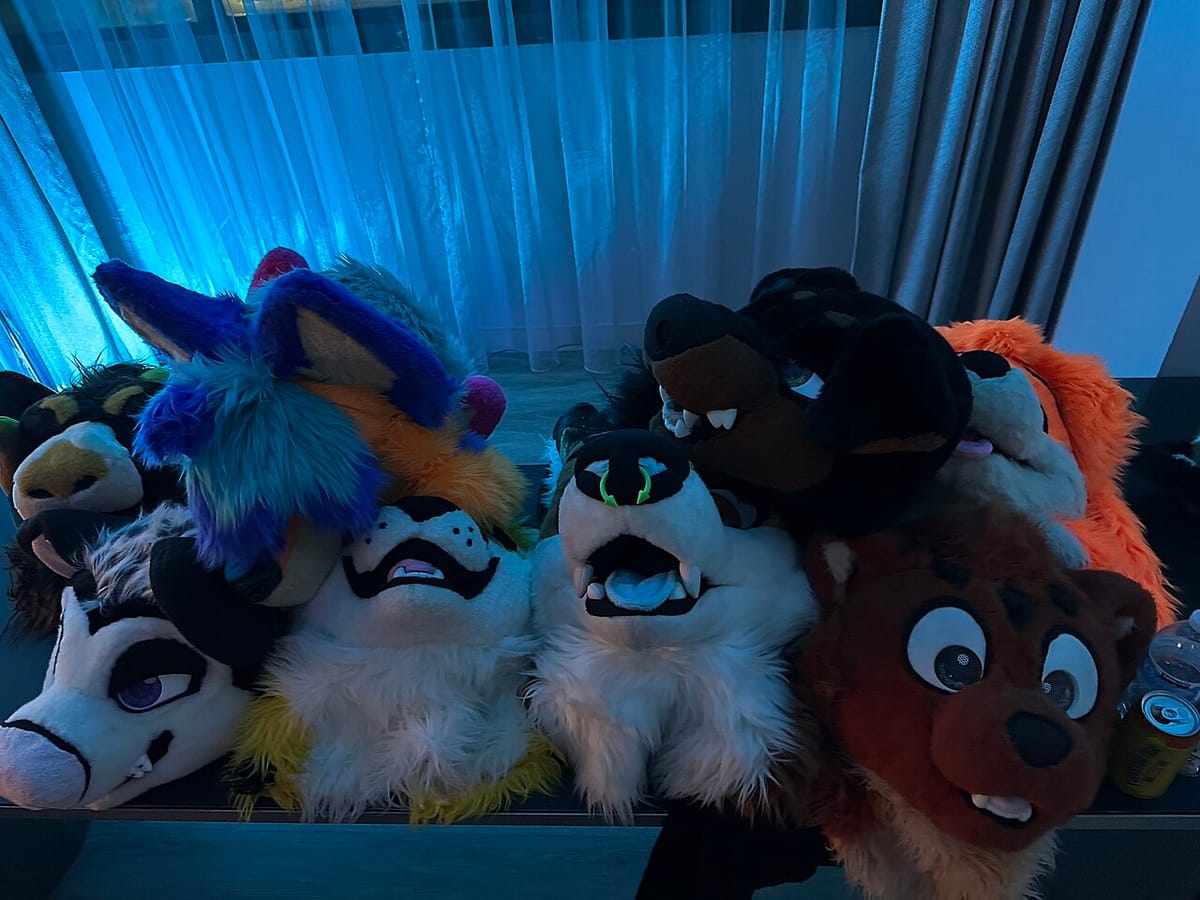
So, that begs the question. What is this scam? How does our article on capitalism in the furry community relate to it? The answer is simple: fursuits. As fursuits become exorbitantly more expensive at a rate far exceeding inflation, and as fursuit buyers encourage more and more gadgets like water cooling and tech to be integrated driving up minimum material costs for fursuits, working class furries become ever more disparaged from purchasing a suit. As a result of this disparity, they seek out more affordable, more reasonable fursuit makers. Maybe their friend who knows how to sew can make one, or maybe they can get away with just a head and an affordable onesie from an online store. Some furries might settle for a Spirit Halloween or Alibaba fursuit, which can run under $100USD in some cases, but doesn't capture their fursona. Some furries will learn to craft at home. Some furries will commission friends who craft at home. Yet, a majority will go online to marketplaces like TikTok, Instagram, and Telegram, and they'll seek out lower cost fursuits. Maybe one for $3,000 instead of $10,000. Or a head for $500 instead of $3,500. This search is preyed upon by scammers, who often post misleading videos and builds to create the guise of legitimacy. They set their "prices" very low, to capture the very furries looking for lower quality but more affordable suits, and create supposedly generous payment plans. Once they've hooked a furry, they get their monthly payments or large downpayment. They send misleading updates to string the furry along, and then ghost the furry when they're supposed to send out the fursuit or head.
They exploit the situation created by capitalism, to rob those most victimized by it. They lie online, to capture a demand with a faux product in an unregulated market, and steal thousands from those who can barely afford their next meal or next electric bill. Some, not all, of these scammers might be in a similar economic situation to those they're scamming, as a product of capitalism at large. But, this acknowledgement does not excuse their actions against fellow working class furries.
A personal anecdote of mine: a friend of mine was new to the furry community, but very excited to create content. He joined TikTok, started making content to bring smiles to others' faces. He was not on TikTok to earn money, and barely did so. He just wanted people to smile in what otherwise is often a cruel world. He owned and operated his own small business in his local community. This mean that he was often living paycheck to paycheck, with a decent portion of time having negative balances in his bank. He struggled to provide for his wife and his child. But, he scraped by. He decides that he wants a head, to use on his channel and to wear when he goes to his local furry bowling events. He scours TikTok for months, looking for legitimate appearing makers that were within his very limited budget. He finds one, speaks with them, agrees to a price and specs, and makes his down payment. A few months later, after he's paid most of his payments to the maker, he gets a message that supply costs have gone up, and the maker needs some more money that was unplanned for. So, my friend sends it, understanding that material costs do rise, and understanding that such a low price didn't account for those increases. A short while later, he gets a message appealing to his emotions asking for some extra in labor costs because the maker is struggling to afford food at the moment, but the head is almost done. My friend, being a truly great person, sends it, knowing intimately what it's like to struggle to afford food. Months go by, no updates. My friend asks, and the maker gives excuses why the head is not ready yet, but my friend is only frustrated. The maker messages with a date it'll be ready by, the day comes and goes. This happens about three times, and then the maker blocks my friend. My friend, confused as to what's going on, asks around. He eventually stumbles onto a group of people who were also scammed by this same person. He creates a second account, goes to the maker's channel, and sees he's still advertising low prices and quick deliveries, and using content from other makers to seem legitimate. He reports it, TikTok does nothing. He makes a TikTok exposing the scammer by just giving his anecdote, TikTok removes the video. So in the end, my friend was scammed out of over $1,000, nothing happened to the scammer, and more victims are being racked up.
This situation would not have existed if legitimate makers' prices were more reasonable to the working class. If wealth disparities were not as extreme, it would be more difficult to scam people because the "catch" that the scammers have cheap prices would not be as appealing when a reputable maker is the same price. Scammers take advantage of economic situations that encourage people to ignore red flags. Limited fursuit pictures? Must be a small maker, their prices are low. Less promises for communications and updates and a more vague timeline? Must be because they're working on multiple suits at once and aren't as organized as a big maker, they're affordable. No website or build books for their past products, and weirdly edited videos showing them off? They must be new, and not familiar with how things are done with the big wigs, they're selling to first time buyers.
Combating these scams requires not only fighting them directly by calling them out publicly and if possible legally. It also requires combating the conditions that create the ease with which they scam in the first place. Disincentivize people from finding them, because higher quality and more assurances can be found elsewhere for similar prices. Dismantling capitalism in the furry sphere will not only open the community to more people and make the ability to express oneself through a fursuit easier, but it will also reduce the presence and likelihood of scams. Instead of someone saying "don't go with them, they might be a scam, instead, save up $7,000 more and go with this maker that might make your suit in 2035," create the situation where someone says "they don't have much info on their website, they could be a scam, you should go with this maker instead, they're $500 more expensive but my friend has bought a suit from them and loves it."
Capitalism affects us in a multitude of ways. Directly, and more nefariously, indirectly. Pricing out furries not only makes them unable to get a fursuit, but it makes them want to find alternative means of obtaining them. If we combat the systemic causes that create that search, we can combat the secondary effects of that. Much of my recommendations remain the same as the previous article discussing capitalism in the furry community. Commissioners should support local artists and makers, artists and makers should price their products to their community or offer a second pricing level for those who are local, and conventions should make price to attend more reasonable so more furries can interact and socialize, as well as meet with local makers and artists in the Dealer's Dens. In addition, if you see something suspicious, investigate it heavily before paying anything. Investigate anyways. I was almost scammed out of $3,000 by a maker who a friend of a friend uncovered was a scam, even though there was nothing suspicious about them that I could find. Inform your friends about your investigations if you uncover a scam or suspicious behavior. Speak up. Scammers get mad that you ask for more proof, official makers will have progress reports to prove their validity. A scammer will want you to ignore suspicious activities, an official maker will want to assure you of their product to keep you as a customer.
Encourage your friends to combat capitalism in the furry community however they can. Disincentivize scammers, disincentivize greed, disincentivize capitalism, and foster community.
In Solidarity,
FurInform
.jpg)