
A Brief Glimpse into the DPRK
The Democratic People's Republic of Korea, often shortened to the DPRK or referred to in the West as the exonym "North Korea," is a controversial topic these days rife with misinformation from all sides of the debate. Though, it would be remiss of me not to note that a vast majority of that misinformation comes from the West. Founded as a nation following the Japanese surrender and relinquishment of its settler colony in the Korean Peninsula, the republic is derogatorily referred to as the Hermit Kingdom by its detractors, but this is far from the truth.
The DPRK is a vibrant and culturally rich country that relies on a political ideology derived from Marxist-Leninist Thought. It was developed into an ideology called Juche. Juche encourages self reliance and independence from outside forces as a matter of national security and of cultural and sovereign preservation. Its people are taught to farm for themselves, innovate and develop technology at home, build and operate machinery that meets the needs of the country, and more. Overall, it has been the driving force in the nation since the illegal dissolution of the USSR, and one that in recent years has indeed seen great success. The story though of how the DPRK arrived to where it is originates in the early foundation of its nation. Following shortly after the independence of both the DPRK and ROK (South Korea), the living conditions in both countries were roughly equivalent, however, after only a few years, the DPRK had a much higher living standard than the ROK. Calls for eventual reunification began immediately following World War II, and the DPRK acted on these, initiating the Korean War. There is misinformation out there discussing the ROK starting the conflict and blaming the DPRK, however contemporary records from the DPRK, USSR, and other primary sources do confirm that it indeed was the DPRK who began the conflict with the stated goal of reunification. Within a few short weeks, they had taken most of the peninsula, driving the pro-Western forces to the city of Busan. Throughout this advance, few war crimes were committed against the civilian population of the ROK by the DPRK forces, and reconstruction efforts had already begun in many of the major cities of the newly captured territory. It was at this time where the conflict seemed practically over that the US stepped in, deploying troops and bombers to the peninsula. Their advance led to the rapid re-taking of the peninsula almost to the Chinese Border. Amongst this advance, we see carpet bombing tactics employed razing cities in the DPRK to rubble and frequent and pronounced war crimes against the DPRK population and suspected collaborators in the ROK including deliberate targeting of civilians. Seeing the threat posed by the US forces, China stepped in on the side of the DPRK and eventually regained the territory formerly lost in the wave of US advance, leading ultimately to the stalemate and armistice we have today. Throughout the conflict, the DPRK suffered horrible losses in both infrastructure and more importantly citizenry and soldiers. While they had not committed acts of scorched earth as the US advanced, the US forces did when the DPRK forces advanced. Farmland was destroyed, cities nothing more than concrete rubble sandboxes, industrial areas erased, entire towns massacred. It is from this that we see the true development of the DRPK. A nation so thoroughly destroyed by an enemy that it had no other choice but to rebuild with a fervent sense of self reliance and on the principle of defense against the threat of a possible repeat of those events. We see the state consolidate power into its party across worker unions, develop its military, rapidly rebuild itself and its industry following the war, and over time develop the Juche ideology.
After reconstruction, the DPRK still offered a better quality of life than its southern neighbor. Although the ROK would overtake it following the implementation of the chaebol system, which deeply plagues the country to this day, the DPRK continued to provide for its citizens with assistance from fellow communist states like China and the USSR. It is said that Ceaușescu even visited the nation and based his construction projects in Buchurești on Pyongyang's impressive communist architecture. Housing and food was guaranteed by the state, education was well funded and literacy rates were high. This was until the collapse of foreign assistance entering North Korea. During the era of the Cold War, the embargoes placed upon the DPRK did not affect it greatly because of support from other Eastern Bloc states which allowed it to keep its industry and agricultural sectors alive and well. Following the Cold War however, the DPRK was left largely to its own devices. Due to mismanagement on a governmental level driven by the nation's history, and the sudden impacts of the embargoes as former allies turned their backs on the DPRK, we saw the Arduous March, also known as the North Korean Famine. This period is largely where the West obtains most of its misinformation that it spreads to this day.
The Arduous March was a horrible time for the DPRK, which is recognized by both the DPRK and the West, despite what the West will have you believe. Widespread famine struck the nation which led to rampant malnutrition and death. Aid was refused due to much of it having strings attached, such as those we frequently see from the IMF. Medications and lifesaving equipment dried up, and the country was faced with epidemics and deaths from otherwise treatable conditions. Former allies, such as Cuba, who were sympathetic to the DPRK were unable to provide aid because they too were struggling in the wake of the cessation of their trading block at the hands of Western businessmen. Embargoes from the West were not lifted to alleviate the suffering of the DPRK citizens, community driven humanitarian aid was hindered by the US and its allies. The West immediately pointed to the Arduous March as reason for the DPRK's boogeyman status. As people fled the DPRK's horrible conditions, and spoke of those conditions, the West platformed them and used them to prove the DPRK directly caused the famine. They pointed to the instability of the penal system at the time as examples of rife corruption and abuse of its population. They ignored biases that these people might hold as those who fled, ignoring that not everyone in the DPRK has the same lived experiences. They silenced milder criticisms of the DPRK and paraded the more outlandish and hyperbolic ones. They encouraged "escapees" to create tall tales about their life in the DPRK because it meant they received more support and supplies from the US government and its allies. To this day, this is the doctrine that governs the opinion on the DPRK. The Arduous March continues on, the government abuses its people more than any other country on Earth, the people are the least free people in history, simultaneously every citizen both has no clue what's going on outside of the DPRK borders and is totally indoctrinated and also is acutely aware of just how "bad" things are and universally hate the government, so on and so forth.
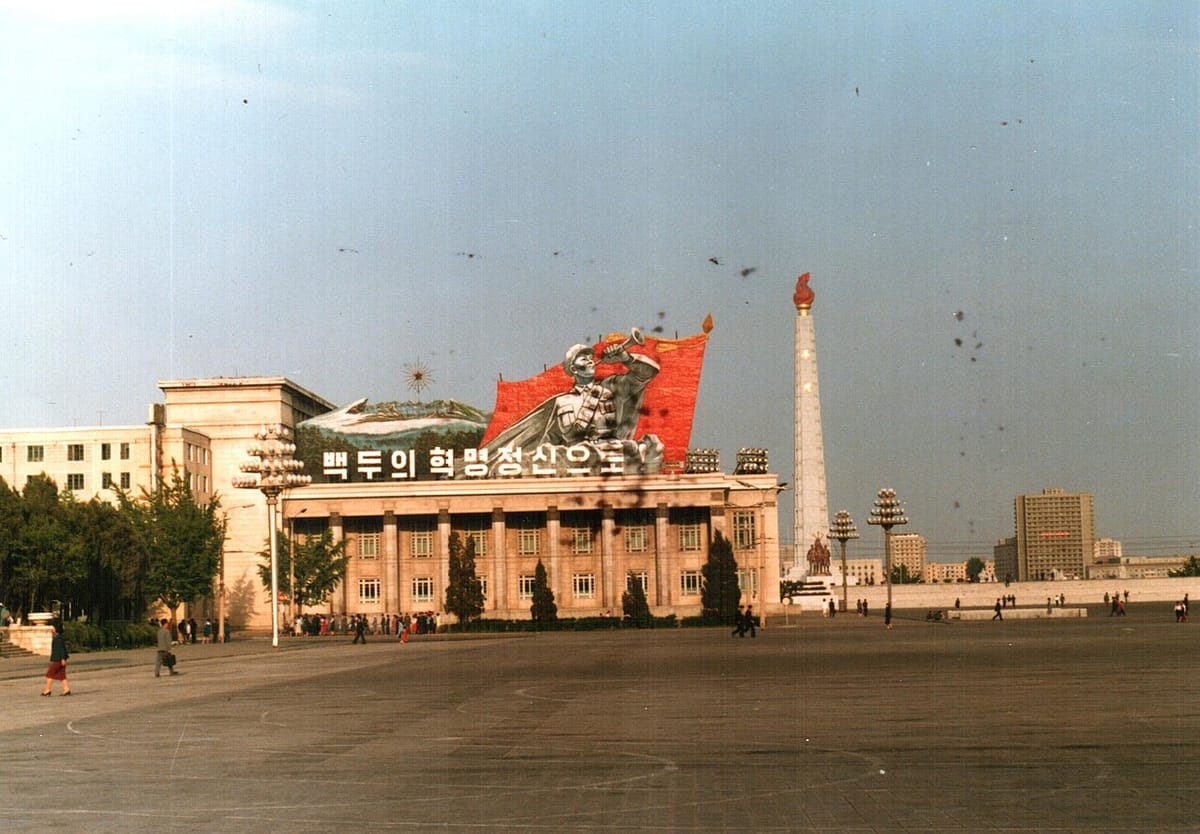
In the modern DPRK, this is far from the truth. Yes, there are concerns about freedom of speech. Yes, there are concerns about severity of their penal system. Yes, there are concerns about inequalities in rations that persist in rural areas following the Arduous March. Yes, there are concerns about the true nature of the democratic systems in place. But these are exceptions, rather than the rule. These are things that can be discussed and understood through nuance and historical materialism. The average citizen of the DPRK is guaranteed housing. Each year we see more and more quality and modern housing being built across all cities in the country. We see worker retreats and local theme parks being built explicitly for the average DPRK citizen to enjoy. We see more and more locally built and affordably priced public transit put in place in cities across the country. The technology and IT sector continues to grow despite supposed governmental handicaps claimed by the West. We see local food production increasing at impressive rates with newly constructed greenhouses and renewable energy for water filtration and crop cultivation. We see Pyongyang expand with new urbanized and walkable districts, fully connected by public transit with local shops and restaurants given to both workers and families of fallen soldiers. All the while, without rampant capitalist influence.
The Arduous March was horrible, and genuine concerns can be raised by some of the narratives promoted by the DPRK government and actions taken by the DPRK government. It is not perfect, and we are not here to say it is. We are also not here to play the comparative game. The DPRK can be understood on its own merits. Misinformation and propaganda spread by the West can be directly disproven by analyzing the DPRK on its own. Lies about historical revisionism in the DPRK spread by the US are confirmed false by DPRK state run media reporting. Claims of DPRK citizens who have claimed asylum in the US are proven false by tourists visiting the country and "capturing pictures of things they're not supposed to capture." Independent NGO's regularly confirm the progress that has been made under Kim Jong Un, in spite of supposed stagnation purported by the West. We could go on. The DPRK is not the best place on Earth to live, but it is also not the worst. If we do play the comparative game, there are far worse places to live that are directly supported and encouraged by the capitalist world order.
This article is not to act as a definitive end-all-be-all information on the DPRK. It is not to independently dispel the myths with demonstrable evidence and PhD's worth of research. It is to start the discussion, and open you up to the presence of the misinformation. Even as communists, it is easy to see what the US and its allies report, and see so little reported from the DPRK that it seems factually true. I am not here to advocate for apologism for the DPRK, or to tell you that you actually must love the DPRK because they're communist. You can disagree with the DPRK fundamentally, and think it is a terrible country, but still base your opinion on factual information instead of lies spread by those who benefit from them. Explore resources, understand their biases, educate yourself on the nation's history and the West's war crimes that prompted the militaristic culture. A proper discussion, and a discussion that leads to tangible progress, is one that starts from a point of understanding of actual conditions.
In Solidarity,
FurInform
Starting Sources:
DPRK Explained: www.youtube.com/@DPRKExplained
In the Kimdom (A Western Perspective Channel): www.youtube.com/@kimdomcome
https://eng.globalaffairs.ru/articles/commerce-dprk-lankov/
https://dprkmedia.com/en/kpm-top-2/
https://kcnawatch.org/



.jpg)